|
|
|
|
[pick list]
[Dear]
[Hello]
[pick list]
[Dr. Last Name],
[First Name],
[First Name Last Name],
|
|
Thank you again for taking the time to speak with me about GAVRETO® (pralsetinib).
|
|
I wanted to follow up our conversation by sharing important information about GAVRETO, an approved targeted therapy for patients with
[pick list][falsecertain RET+ cancerstrueRET+ mNSCLC or advanced thyroid cancer].1
|
|
GAVRETO is indicated for the treatment of1:
|
| > |
Adult patients with RET fusion+ mNSCLC as detected by an FDA approved test |
| > |
Patients 12 years+ with advanced or metastatic RET-mutant MTC who require systemic therapy |
| > |
Patients 12 years+ with advanced or metastatic RET fusion+ thyroid cancer who require systemic therapy and are RAI refractory |
|
|
These indications are approved under accelerated approval based on overall response rate and duration of response. Continued approval for these indications may be contingent upon verification and description of clinical benefit in confirmatory trials.
|
|
SELECT SAFETY INFORMATION
|
|
Interstitial Lung Disease (ILD)/Pneumonitis occurred in 10% of patients who received GAVRETO, including 2.7% with Grade 3/4, and 0.5% with fatal reactions. Monitor for pulmonary symptoms indicative of ILD/pneumonitis. Withhold GAVRETO and promptly investigate for ILD in any patient who presents with acute or worsening of respiratory symptoms (e.g., dyspnea, cough, and fever). Withhold, reduce dose or permanently discontinue GAVRETO based on severity of confirmed ILD.
|
|
|
Please see Important Safety Information below and full Prescribing Information.
|
|
mNSCLC=metastatic non–small cell lung cancer; MTC=medullary thyroid cancer; RAI=radioactive iodine; RET+=rearranged during transfection positive.
|

|
The only once-daily RET inhibitor1
Pralsetinib targets RET in mNSCLC, advanced or metastatic MTC, and advanced or metastatic thyroid cancer.1
|

|
NCCN-RECOMMENDED TREATMENT OPTION
NCCN Clinical Practice Guidelines in Oncology (NCCN Guidelines®) recommend pralsetinib (GAVRETO) as a Category 2A:
|
|

|
preferred treatment option for first-line RET fusion-positive metastatic NSCLC2*
|
|
|
preferred treatment option for select patients with recurrent/persistent locoregional or distant metastatic RET mutation-positive MTC3†
|
|
|
systemic treatment option for structurally persistent/recurrent locoregional or distant metastatic RET fusion-positive PTC not amenable to RAI therapy3
|
|

|
NCCN Guidelines® Recommend Testing in Eligible Patients with NSCLC or Advanced Thyroid Cancer:
|
|
|
|
Molecular testing for certain biomarkers, including RET, in eligible patients with metastatic NSCLC2‡
|
|
|
Genomic testing to identify actionable mutations, including RET, for structurally persistent/recurrent locally advanced or metastatic PTC not amenable to RAI therapy3
|
|
|
Germline RET testing in all patients with a new diagnosis of MTC3
|
|
|
|
NCCN=National Comprehensive Cancer Network; PTC=papillary thyroid cancer.
|
| * |
See the NCCN Guidelines for detailed recommendations, including other preferred treatment options.2 |
| † |
For locoregional, unresectable carcinoma that is symptomatic or progressing by RECIST criteria; or for distantly metastatic disease that is symptomatic or progressing according to RECIST criteria. |
| ‡ |
The NCCN Guidelines for NSCLC provide recommendations for certain individual biomarkers that should be tested and recommend testing techniques but do not endorse any specific commercially available biomarker assays or commercial laboratories. |
|
NCCN makes no warranties of any kind whatsoever regarding their content, use or application and disclaims any responsibility for their application or use in any way. |
|

|
ARROW STUDY
Efficacy and safety with GAVRETO (400 mg once daily) was evaluated in patients with RET fusion+ mNSCLC, advanced or metastatic RET-mutant MTC, and advanced or metastatic RET fusion+ thyroid cancer in the ARROW study, a phase 1/2, nonrandomized, open-label, single-arm, multicohort, multicenter clinical trial.1 All patients must have had a non-resectable RET-altered solid tumor or MTC per local assessment of tumor tissue and/or blood. All patients must also have had an Eastern Cooperative Oncology Group (ECOG) performance status (PS) of 0-1.4
|
|
|
|
SEE THE RESULTS
|
|
RET+ mNSCLC
|
|
RET+ advanced thyroid cancer
|
|
|
Hypertension occurred in 29% of patients, including Grade 3 hypertension in 14% of patients. Overall, 7% had their dose interrupted and 3.2% had their dose reduced for hypertension. Treatment emergent hypertension was most commonly managed with anti-hypertension medications. Do not initiate GAVRETO in patients with uncontrolled hypertension. Optimize blood pressure prior to initiating GAVRETO. Monitor blood pressure after 1 week, at least monthly thereafter and as clinically indicated. Initiate or adjust anti-hypertensive therapy as appropriate. Withhold, reduce dose, or permanently discontinue GAVRETO based on the severity.
|
Please see Important Safety Information below and
full Prescribing Information.
|
|

|
Assistance Options for Your Eligible Patients
Genentech Access Solutions provides helpful access and reimbursement support to assist your patients and practice after GAVRETO is prescribed.
For more information, visit genentech-access.com/GAVRETO
|
|
|
References: 1. GAVRETO Prescribing Information. Genentech, Inc. April 2021. 2. Referenced with permission from the NCCN Clinical Practice Guidelines in Oncology (NCCN Guidelines®) for Non-Small Cell Lung Cancer V.5.2021. © National Comprehensive Cancer Network, Inc. 2021. All rights reserved. Accessed June 16, 2021. To view the most recent and complete version of the guideline, go to NCCN.org. 3. Referenced with permission from the NCCN Clinical Practice Guidelines in Oncology (NCCN Guidelines®) for Thyroid Carcinoma V.1.2021. © National Comprehensive Cancer Network, Inc. 2021. All rights reserved. Accessed May 19, 2021. To view the most recent and complete version of the guideline, go to NCCN.org. 4. Phase 1/2 study of the highly-selective RET inhibitor, pralsetinib (BLU-667), in patients with thyroid cancer, non-small cell lung cancer, and other advanced solid tumors (ARROW). https://clinicaltrials.gov/ct2/show/NCT03037385. Accessed May 19, 2021.
|
|
I’m including some additional information that you may find useful.
|
[email fragments]
|
[GAVRETO RET+ mNSCLC and Advanced Thyroid Cancer Product Brochure]
|
|
GAVRETO RET+ mNSCLC and Advanced Thyroid Cancer Product Brochure
An overview of GAVRETO for the treatment of patients with RET+ mNSCLC or advanced thyroid cancer.
|
|
|
[GAVRETO mNSCLC Treatment-Naïve Update Overview]
|
|
GAVRETO mNSCLC Treatment-Naïve Update Overview
An overview of efficacy and safety results and exploratory follow-up analyses in treatment-naïve mNSCLC patients treated with GAVRETO.
|
|
|
[GAVRETO Website for Healthcare Professionals]
|
|
|
GAVRETO Website for Healthcare Professionals
Website for healthcare professionals to learn more about GAVRETO and available resources.
|
|
|
[GAVRETO Dosing and Administration Guide]
|
|
|
GAVRETO Dosing and Administration Guide
How to dose and administer GAVRETO.
|
|
|
[Oncology Prescribers Service Form]
|
|
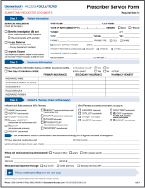
Oncology Prescriber Service Form
This form includes patient, insurance, and prescription information and is used when Genentech Access Solutions contacts a patient's health insurance plan to determine his or her coverage.
|
|
|
[GAVRETO Access & Reimbursement Guide]
|
|
GAVRETO Access & Reimbursement Guide
Includes information on product ordering, patient support, navigating the approval process, managing denials and appeals, and coverage information for diagnostic tests and related coding.
|
|
|
|
|
I’m available in person or virtually to answer any questions you may have.
|
[pick list]
[Sincerely]
[Best]
|
|
|
|
|
Hepatotoxicity: Serious hepatic adverse reactions occurred in 2.1% of patients treated with GAVRETO. Increased aspartate aminotransferase (AST) occurred in 69% of patients, including Grade 3/4 in 5% and increased alanine aminotransferase (ALT) occurred in 46% of patients, including Grade 3/4 in 6%. The median time to first onset for increased AST was 15 days (range: 5 days to 1.5 years) and increased ALT was 22 days (range: 7 days to 1.7 years). Monitor AST and ALT prior to initiating GAVRETO, every 2 weeks during the first 3 months, then monthly thereafter and as clinically indicated. Withhold, reduce dose or permanently discontinue GAVRETO based on severity.
|
|
Grade ≥ 3 hemorrhagic events occurred in 2.5% of patients treated with GAVRETO including one patient with a fatal hemorrhagic event. Permanently discontinue GAVRETO in patients with severe or life-threatening hemorrhage.
|
|
Tumor Lysis Syndrome (TLS): Cases of TLS have been reported in patients with medullary thyroid carcinoma receiving GAVRETO. Patients may be at risk of TLS if they have rapidly growing tumors, a high tumor burden, renal dysfunction, or dehydration. Closely monitor patients at risk, consider appropriate prophylaxis including hydration, and treat as clinically indicated.
|
|
Impaired wound healing can occur in patients who receive drugs that inhibit the vascular endothelial growth factor (VEGF) signaling pathway. Therefore, GAVRETO has the potential to adversely affect wound healing. Withhold GAVRETO for at least 5 days prior to elective surgery. Do not administer for at least 2 weeks following major surgery and until adequate wound healing. The safety of resumption of GAVRETO after resolution of wound healing complications has not been established.
|
|
Based on findings from animal studies and its mechanism of action, GAVRETO can cause fetal harm when administered to a pregnant woman. Advise pregnant women of the potential risk to a fetus. Advise females of reproductive potential to use effective non-hormonal contraception during treatment with GAVRETO and for 2 weeks after the final dose. Advise males with female partners of reproductive potential to use effective contraception during treatment with GAVRETO and for 1 week after the final dose. Advise women not to breastfeed during treatment with GAVRETO and for 1 week after the final dose.
|
|
Common adverse reactions (≥25%) were constipation, hypertension, fatigue, musculoskeletal pain and diarrhea. Common Grade 3/4 laboratory abnormalities (≥2%) were decreased lymphocytes, decreased neutrophils, decreased hemoglobin, decreased phosphate, decreased calcium (corrected), decreased sodium, increased AST, increased ALT, decreased platelets and increased alkaline phosphatase.
|
|
Avoid coadministration of GAVRETO with strong CYP3A inhibitors or combined P-gp and strong CYP3A inhibitors. If coadministration cannot be avoided, reduce the GAVRETO dose. Avoid coadministration of GAVRETO with strong CYP3A inducers. If coadministration cannot be avoided, increase the GAVRETO dose.
|
|
You may report side effects to the FDA at 1-800-FDA-1088 or www.fda.gov/medwatch. You may also report side effects to Genentech at 1-888-835-2555.
|
|
Please click here to see the full Prescribing Information for GAVRETO.
|
|
|
|
|
|