|
[Salutation] [Title] [NAME],
[Salutation-choose 1:
falseDeartrueHellotrueGreetingstrueGood morningtrueGood eveningtrueGood afternoon]
[Title-choose 1:]
falseDr.trueMisstrueMrs.trueMr.true null]
[Name Format-choose 1:]
falseFirst Name Last NametrueLast NametrueFirst Name]
|
|
I hope you are doing well. I wanted to share some information and resources about WAKIX.
If you have any questions, please let me know how I can help.
|
|
WAKIX is indicated for the treatment of excessive daytime sleepiness (EDS) or cataplexy in adult patients with narcolepsy.
|
|
WAKIX is contraindicated in patients with known hypersensitivity to pitolisant or any component of the
formulation and in patients with severe hepatic impairment.
Read more Important Safety Information.
|
|
Additional Resources
|
|
Download or order resources at no cost to you and your patients.
|
|
|
|
|
Dosing WAKIX With Other Medications
|
|
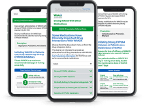
Some medications have clinically important drug interactions with WAKIX.
|
|
Use this tool to identify drug interactions and recommendations for dosing WAKIX with other medications.
|
|
|
|
|
Dr. Bruce Corser Presents a Patient Case Study
|
|
Watch Bruce Corser, MD, from the Sleep Management Institute, as he discusses a patient with newly diagnosed narcolepsy.
|
|
|
|
|
Dr. Margaret Park Presents a Patient Case Study
|
|
Hear Margaret Park, MD, from Chicago Sleep Health, review a
patient case on ongoing excessive daytime sleepiness in narcolepsy.
|
|
|
|
|
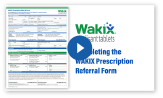
How to Complete the WAKIX Prescription Referral Form
|
|
Watch this video on how to complete and submit the WAKIX Prescription Referral Form.
|
|
|
|
|
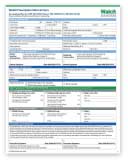
How to Prescribe WAKIX
|
|
|
|
View an annotated version of the WAKIX Prescription Referral Form to get your patients started.
|
|
|
|
|
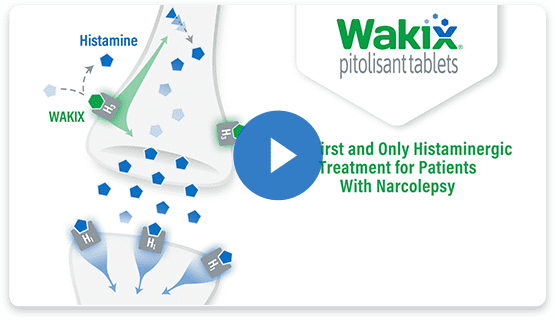
WAKIX Increases Histamine Levels in the Brain
|
| • |
Histamine is a natural chemical in the brain that promotes and stabilizes wakefulness throughout the day
|
| • |
The MOA of WAKIX in EDS or cataplexy in adult patients with narcolepsy is unclear
|
| • |
Its efficacy could be mediated through its activity as an antagonist/inverse agonist at H3 receptors
|
| • |
WAKIX binds to H3 receptors with a high affinity (Ki = 1 nM)
|
|
|
WAKIX Is Not a Controlled Substance
|
| • |
WAKIX is not a stimulant
|
| • |
In a human abuse potential study, WAKIX demonstrated an abuse potential profile similar to placebo1,*
|
| |
| — |
No signals from any experimental measures suggestive of abuse |
|
|
|
|
| Watch this video to see how WAKIX is thought to work. |
|
|
|
Reference: 1. Setnik B, McDonnell M, Mills C, et al. Evaluation of the abuse potential of pitolisant,
a selective H3-receptor antagonist/inverse agonist, for the treatment of adult patients with
narcolepsy with or without cataplexy. Sleep. 2020;43(4):zsz252. doi: 10.1093/sleep/zsz252.
|
|
|
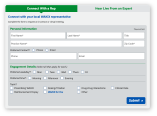
Request a Representative or Healthcare Provider Meeting
|
|
Connect with your local WAKIX representative and/or request a speaker program.
|
|
Complete the forms to request a one-on-one interaction with your local WAKIX representative or a speaker program for you and your practice.
|
|
|
|
|
Setting Appropriate Patient Expectations With WAKIX
|
|
When initiating any treatment option, especially one for a chronic disorder, it is important to set patient expectations
|
 |
WAKIX is not a stimulant. |
 |
WAKIX should be taken once daily in the morning upon wakening. |
 |
WAKIX should be individually titrated to the effective dosage. |
 |
Symptoms may improve at different times or rates when taking
WAKIX. It may take up to 8 weeks for some patients to achieve a clinical response.
|
|
|
Download important information for patients about what they can expect when starting treatment with WAKIX.
|
|
|
|
|
Support for Your Patients With WAKIX for You
|
|
Eligible patients may pay as little as a $0 copay on their WAKIX prescriptiona
|
|
WAKIX for You is a support program to help your patients get
started and stay on track with WAKIX. This program offers
individualized support for your patients based on their specific needs.
WAKIX for You helps facilitate access to therapy through
reimbursement support, financial assistance, and coordination with the specialty pharmacy.
|
|
|
|
Download this brochure to discuss WAKIX for You with your patient.
|
|
|
|
|
Understanding WAKIX Clinical Data for Cataplexy
|
|
Dr. Asim Roy
|
|
Hear from Dr. Roy, a board-certified neurologist and sleep
specialist, as he explains the clinical data for WAKIX in cataplexy and the safety profile of WAKIX.
|
|
|
|
|
Understanding WAKIX Clinical Data for Excessive Daytime Sleepiness (EDS) in Narcolepsy
|
|
Dr. Haramandeep Singh
|
|
Watch Haramandeep Singh, MD, a board-certified psychiatrist and
sleep specialist, as he presents clinical data for WAKIX. Dr. Singh
explains the proven efficacy of WAKIX in EDS, the safety profile of
WAKIX, and the evaluation of EDS using the Epworth Sleepiness Scale (ESS).
|
|
|
|
|
WAKIX Offers Convenient Once-Daily Morning Dosing
|
|
Watch this video to understand the recommended dosing and
titration for WAKIX, dosage modifications for specific patient
populations, and information to help set patient expectations.
|
|
|
|
|
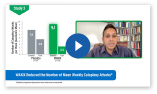
WAKIX Resulted in Significantly Fewer Cataplexy Attacks Versus Placebo in Two Clinical Studies
|
|
Learn more about WAKIX clinical data.
|
|
|
|
|
WAKIX Safety and Tolerability Profile in Clinical Studies
|
| • |
In the placebo-controlled clinical studies conducted in patients
with narcolepsy with or without cataplexy, the most common
adverse reactions (occurring in ≥5% of patients and at least
twice the rate of placebo) with the use of WAKIX were insomnia
(6%), nausea (6%), and anxiety (5%)
|
|
Adverse Reactions That Occurred in ≥5% of WAKIX-Treated Patients and More Frequently Than in Placebo-Treated Patientsa
|
|
Adverse Reaction
|
WAKIX
(n=152)
|
Placebo
(n=114)
|
|
Headacheb
|
18%
|
15%
|
|
Insomniab
|
6%
|
2%
|
|
Nausea
|
6%
|
3%
|
|
Upper respiratory tract infectionb
|
5%
|
3%
|
|
Musculoskeletal painb
|
5%
|
3%
|
|
Anxietyb
|
5%
|
1%
|
|
| • |
Additional adverse reactions occurring in ≥2% of WAKIX-treated
patients and more frequently than in placebo-treated patientsa
were heart rate increased,b hallucinations,b irritability, abdominal
pain,b sleep disturbance,b decreased appetite, cataplexy, dry mouth, and rashb
|
| • |
No clinically significant changes in mean values for blood
pressure were observed in double-blind, placebo-controlled narcolepsy studies1
|
|
|
Patient discontinuations due to an adverse eventa
|
| • |
3.9% (n=6/152) with WAKIX
|
| • |
3.5% (n=4/114) with placebo
|
|
|
|
|
Learn more about the safety and tolerability of WAKIX.
|
|
|
|
Reference: 1. Data on file. Harmony Biosciences.
|
|
|
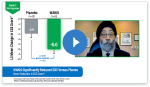
WAKIX Significantly Reduced Excessive Daytime Sleepiness Versus Placebo in Two Clinical Studies
|
|
Learn more about WAKIX clinical data.
|
|
|
|
|
Patient Case Study: Emily
|
| Age: |
27 |
| Occupation: |
Attorney |
| Diagnosis: |
Narcolepsy with cataplexy (narcolepsy type 1) |
|
|
Take a moment to review this patient case study below and see how WAKIX may help your patients.
|
|
|
|
|
Patient Case Study: Ryan
|
| Age: |
42 |
| Occupation: |
Physical therapist |
| Diagnosis: |
Narcolepsy without cataplexy (narcolepsy type 2) |
|
|
Take a moment to review this patient case study below and see how WAKIX may help your patients.
|
|
|
|
|
Patient Case Study: Abby
|
| Age: |
24 |
| Occupation: |
Computer programmer |
| Diagnosis: |
Narcolepsy without cataplexy (narcolepsy type 2) |
|
|
Take a moment to review this patient case study below and see how WAKIX may help your patients.
|
|
|
|
|
Patient Case Study: Jack
|
| Age: |
51 |
| Occupation: |
Sales rep |
| Diagnosis: |
Narcolepsy without cataplexy (narcolepsy type 2) |
|
|
Take a moment to review this patient case study below and see how WAKIX may help your patients.
|
|
|
|
|
Patient Case Study: Melissa
|
| Age: |
45 |
| Occupation: |
Computer scientist |
| Diagnosis: |
Narcolepsy with cataplexy (narcolepsy type 1) |
|
|
Take a moment to review this patient case study below and see how WAKIX may help your patients.
|
|
|
|
|
Learn More About WAKIX With Dr. Winter
|
|
Watch Chris Winter, MD, a board-certified neurologist and sleep specialist, as he provides an overview of WAKIX.
|
|
|
|
|
| • |
WAKIX is indicated for the treatment of excessive daytime sleepiness (EDS) or cataplexy in adult patients with narcolepsy.
|
|
| • |
WAKIX is contraindicated in patients with known hypersensitivity to pitolisant or any component of the formulation. Anaphylaxis has been reported. WAKIX is also contraindicated in patients with severe hepatic impairment.
|
|
| • |
WAKIX prolongs the QT interval; avoid use of WAKIX in patients with known QT prolongation or in
combination with other drugs known to prolong the QT interval. Avoid use in patients with a history
of cardiac arrhythmias, as well as other circumstances that may increase the risk of the
occurrence of torsade de pointes or sudden death, including symptomatic bradycardia,
hypokalemia or hypomagnesemia, and the presence of congenital prolongation of the QT interval.
|
| • |
The risk of QT prolongation may be greater in patients with hepatic or renal impairment due to
higher concentrations of pitolisant; monitor these patients for increased QTc. Dosage modification
is recommended in patients with moderate hepatic impairment and moderate or severe renal
impairment (see full prescribing information). WAKIX is not recommended in patients with end-stage renal disease (ESRD).
|
|
| • |
In the placebo-controlled clinical trials conducted in patients with narcolepsy with or without
cataplexy, the most common adverse reactions (≥5% and twice placebo) for WAKIX were
insomnia (6%), nausea (6%), and anxiety (5%). Other adverse reactions that occurred at ≥2% and
more frequently than in patients treated with placebo included headache, upper respiratory
infection, musculoskeletal pain, heart rate increased, hallucinations, irritability, abdominal pain,
sleep disturbance, decreased appetite, cataplexy, dry mouth, and rash.
|
|
| • |
Concomitant administration of WAKIX with strong CYP2D6 inhibitors increases pitolisant exposure by 2.2-fold. Reduce the dose of WAKIX by half.
|
| • |
Concomitant use of WAKIX with strong CYP3A4 inducers decreases exposure of pitolisant by
50%. Dosage adjustments may be required (see full prescribing information).
|
| • |
H1 receptor antagonists that cross the blood-brain barrier may reduce the effectiveness of WAKIX.
Patients should avoid centrally acting H1 receptor antagonists.
|
| • |
WAKIX is a borderline/weak inducer of CYP3A4. Therefore, reduced effectiveness of sensitive
CYP3A4 substrates may occur when used concomitantly with WAKIX. The effectiveness of
hormonal contraceptives may be reduced when used with WAKIX and effectiveness may be reduced for 21 days after discontinuation of therapy.
|
|
| • |
WAKIX may reduce the effectiveness of hormonal contraceptives. Patients using hormonal
contraception should be advised to use an alternative non-hormonal contraceptive method during
treatment with WAKIX and for at least 21 days after discontinuing treatment.
|
| • |
There is a pregnancy exposure registry that monitors pregnancy outcomes in women who are
exposed to WAKIX during pregnancy. Patients should be encouraged to enroll in the WAKIX
pregnancy registry if they become pregnant. To enroll or obtain information from the registry, patients can call 1-800-833-7460.
|
| • |
The safety and effectiveness of WAKIX have not been established in patients less than 18 years of age.
|
| • |
WAKIX is extensively metabolized by the liver. WAKIX is contraindicated in patients with severe
hepatic impairment. Dosage adjustment is required in patients with moderate hepatic impairment.
|
| • |
WAKIX is not recommended in patients with end-stage renal disease. Dosage adjustment of
WAKIX is recommended in patients with moderate or severe renal impairment.
|
| • |
Dosage reduction is recommended in patients known to be poor CYP2D6 metabolizers; these
patients have higher concentrations of WAKIX than normal CYP2D6 metabolizers.
|
|
|
To report suspected adverse reactions, contact Harmony Biosciences at 1-800-833-7460 or FDA at
1-800-FDA-1088 or www.fda.gov/medwatch.
|
|
Please see accompanying Full Prescribing Information.
|
|
| Sincerely, |
|
[REP NAME]
|
|
[REP PHONE]
|
|
[REP EMAIL]
|
|
|
|
|