[Salutation] [Title] [NAME],
[Salutation-choose 1:]
falseDeartrueHellotrueGreetingstrueGood morningtrueGood eveningtrueGood afternoon]
[Title-choose 1:]
falseDr.trueMisstrueMrs.trueMr.true null]
[Name Format-choose 1:]
falseFirst Name Last NametrueLast NametrueFirst Name]
|
[Intro Picklist]
Here is some key information about narcolepsy, cataplexy, and excessive daytime sleepiness (EDS). If you have any questions, please let me know how I can help.
It was a pleasure speaking with you. As we discussed, here is additional information about narcolepsy, cataplexy, and excessive daytime sleepiness (EDS). If you have any questions, please let me know how I can help.
|
|
What are the annual direct medical costs of narcolepsy?
|
|
Learn more about the economic burden of narcolepsy and see how this disabling disorder is often misdiagnosed in the clinical setting.1
|
|
Question: How often do providers misdiagnose narcolepsy?
|
|
Fact: Up to 60% of patients are initially diagnosed as having other conditions1,2:
|
| • |
attention-deficit/hyperactivity disorder
|
| • |
psychiatric disorders
|
| • |
obstructive sleep apnea
|
| • |
insufficient sleep
|
| • |
side effects of medication
|
| • |
circadian rhythm disorders
|
| • |
periodic limb movements
|
|
|
|
|
References: 1. Thorpy MJ, Krieger AC. Delayed diagnosis of narcolepsy: characterization and impact. Sleep Med. 2014:15(2014):505-507.
2. Morganthaler TI, Kapur VK, Brown T, Swick TJ, Alessi C, Aurora RN, et al. Practice parameters for the treatment of narcolepsy and other
hypersomnias of central origin. Sleep. 2007:30;1705-1711.
|
|
|
Two online surveys reveal that providers and patients agree more treatment options are needed1,2
|
|
Online Surveys of Unmet Needs Included:
|
|
286 narcolepsy-treating HCPs—sleep specialists, neurologists, psychiatrists, pulmonologists, primary care physicians (July 2018)
|
|
200 US adults living with narcolepsy (March 2018)
|
|
What treatment options would you consider for patients with narcolepsy?
|
|
|
|
References: 1. Data on file. Harmony Biosciences. 2018. 2. Data on file. Harmony Biosciences.
2018. The information shown is based on a survey of 200 US adults living with narcolepsy.
The survey was conducted online in March 2018 by Versta Research on behalf of Harmony Biosciences, LLC. The Narcolepsy Network collaborated on the patient survey.
|
|
|
Type 1 and Type 2 narcolepsy differ by the presence of cataplexy, a debilitating condition
|
|
The fact is, all people with narcolepsy have excessive daytime sleepiness (EDS). But did you
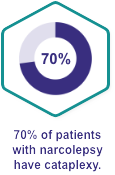
know that along with this irrepressible need to sleep, almost 3 out of 4 have cataplexy too?1,2
|
|
Imagine having a sudden and brief loss of muscle strength or muscle tone that could be brought on by
strong emotions or certain situations, like laughing or being startled. That is what happens when patients
have cataplexy, and it often strikes unexpectedly.2,3
|
|
|
|
References: 1. Roth T, Dauvilliers Y, Mignot E, Montplaisir J, Paul J, Swick T, et al. Disrupted
nighttime sleep in narcolepsy. J of Clin Sleep Med. 2013:9(9);955-965. 2. Feldmen NT.
Narcolepsy. 2003:96(3);277-283. 3. Ahmed I, Thorpy M. Clinical features, diagnosis and treatment of narcolepsy. Clin Chest Med. 2010;31(2):371-381.
|
|
|
Did you know that most treatment options for EDS or cataplexy in narcolepsy are controlled/scheduled substances?
|
|
Scheduling of FDA-approved products for EDS or cataplexy in narcolepsy1-7
|
|
Narcolepsy Symptom |
|
| Drug Class/Drug |
EDS |
Cataplexy |
Drug Schedule* |
Wake-promoting agents
Modafinil1
Armodafinil2
|
 |
|
Schedule IV |
CNS stimulants†
Amphetamine salts3
Methylphenidate4
|
|
|
Schedule II |
Dopamine/
norepinephrine reuptake inhibitor
Solriamfetol5
|
|
|
Schedule IV |
CNS depressants
Sodium oxybate6
Magnesium, potassium, & sodium oxybates7
|
|
|
Schedule III |
|
|
This is not complete product information and should not be construed as comparing
safety, efficacy, or other clinical outcomes. Consult Full Prescribing Information of individual products for more information.
|
|
*Schedule II: High abuse potential, potentially leading to severe psychological or physical
dependence; Schedule III: Low to moderate potential for physical and psychological dependence;
Schedule IV: Low potential for abuse and dependence.8
|
|
†Stimulants approved to treat narcolepsy have a general narcolepsy indication.
|
|
CNS, central nervous system.
|
|
|
|
References: 1. Provigil. Prescribing information. Cephalon, Inc.; 2018.
2. Nuvigil. Prescribing information. Teva Pharmaceuticals; 2018.
3. Adderall. Prescribing information. Teva Pharmaceuticals; 2017.
4. Ritalin. Prescribing information. Novartis Pharmaceuticals Corp.; 2019.
5. Sunosi. Prescribing information. Jazz Pharmaceuticals, Inc.; 2019.
6. Xyrem. Prescribing information. Jazz Pharmaceuticals, Inc.; 2020.
7. Xywav. Prescribing information. Jazz Pharmaceuticals, Inc.; 2020.
8. DEA Drug Scheduling. Available at https://www.dea.gov/drug-information/drug-scheduling. Accessed August 31, 2021.
|
|
|
Imagine making a witty remark or hearing a joke, then suddenly collapsing from a complete loss of muscle control
|
|
Strong emotions and specific situations can trigger cataplexy
|
|
Everyday activities can trigger cataplexy—including being angry, unexpectedly meeting an acquaintance,
or just being startled. These events can cause complete loss of muscle control in the face and jaw, slurred speech, and
jerking and twitching of the face and arms.1
|
|
Learn more about the symptoms of cataplexy and how partial and complete cataplexy differ.
|
|
|
|
Reference: 1. Overeem S, van Nues SJ, van der Zande WL, Donjacour CE, et al. The
clinical features of cataplexy: a questionnaire study in narcolepsy patients with and
without hypocretin-1 deficiency. Sleep Med. 2011;12(2011):12-18.
|
|
|
| Sincerely, |
|
[REP NAME]
|
|
[REP PHONE]
|
|
[REP EMAIL]
|
|
|
|
|