|
[Salutation] [Title] [NAME],
[Salutation-choose 1:]
falseDeartrueHellotrueGreetingstrueGood morningtrueGood eveningtrueGood afternoon]
[Title-choose 1:]
falseDr.trueMisstrueMrs.trueMr.true null]
[Name Format-choose 1:]
falseFirst Name Last NametrueLast NametrueFirst Name]
|
|
Below you will find additional information about WAKIX. If you have any questions, please let me know how I can help.
|
|
WAKIX is indicated for the treatment of excessive daytime sleepiness (EDS) or cataplexy in adult patients with narcolepsy.
|
|
WAKIX is contraindicated in patients with known hypersensitivity to pitolisant or any component of the formulation and in patients with severe hepatic impairment.
|
|
Read more Important Safety Information.
|
|
Review WAKIX clinical data for EDS in narcolepsy
|
|
Watch Dr. Haramandeep Singh, a board-certified psychiatrist and sleep specialist, as he presents clinical data for WAKIX. Dr. Singh explains
the efficacy of WAKIX in EDS, the safety profile of WAKIX, and the evaluation of EDS using the Epworth Sleepiness Scale (ESS).
|
|
Want to know how the ESS scores for WAKIX patients compared to the placebo group?
|
|
|
|
|
Facilitate the narcolepsy discussion with your colleagues
|
|
Once you see the efficacy and safety profile of WAKIX, you’ll have the data you need to start the discussion with your fellow formulary decision makers.
|
|
|
|
|
Discover the efficacy and safety profile of WAKIX in cataplexy
|
|
Review data from clinical studies of WAKIX for the treatment of cataplexy in adults with narcolepsy.
|
|
|
|
|
Have you considered the safety and tolerability profile for WAKIX?
|
|
WAKIX is the first and only FDA-approved histaminergic treatment option for excessive daytime sleepiness (EDS) or cataplexy in adult patients with narcolepsy.
|
|
Learn more about the safety and tolerability of WAKIX in 3 placebo-controlled clinical trials conducted in patients with narcolepsy.
|
|
|
|
|
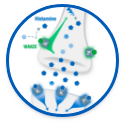
WAKIX increases histamine levels in the brain
|
|
WAKIX is a first-in-class narcolepsy treatment with a novel mechanism of action (MOA).
|
|
WAKIX is the first and only FDA-approved non-scheduled treatment for narcolepsy with or without cataplexy. Learn more about its MOA.
|
|
|
|
|
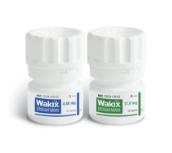
Request your WAKIX Formulary Kit
|
|
Here's the efficacy and safety data you need to help make the decision to include WAKIX on
your formulary. It's a non-scheduled option with a novel mechanism of action for the treatment of EDS or
cataplexy in adults with narcolepsy.
|
|
|
|
|
| • |
WAKIX is indicated for the treatment of excessive daytime sleepiness (EDS) or cataplexy in adult patients with narcolepsy.
|
|
| • |
WAKIX is contraindicated in patients with known hypersensitivity to pitolisant or any component of the formulation. Anaphylaxis has been reported. WAKIX is also contraindicated in patients with severe hepatic impairment.
|
|
| • |
WAKIX prolongs the QT interval; avoid use of WAKIX in patients with known QT prolongation or in
combination with other drugs known to prolong the QT interval. Avoid use in patients with a history
of cardiac arrhythmias, as well as other circumstances that may increase the risk of the
occurrence of torsade de pointes or sudden death, including symptomatic bradycardia,
hypokalemia or hypomagnesemia, and the presence of congenital prolongation of the QT interval.
|
| • |
The risk of QT prolongation may be greater in patients with hepatic or renal impairment due to
higher concentrations of pitolisant; monitor these patients for increased QTc. Dosage modification
is recommended in patients with moderate hepatic impairment and moderate or severe renal
impairment (see full prescribing information). WAKIX is not recommended in patients with end-stage renal disease (ESRD).
|
|
| • |
In the placebo-controlled clinical trials conducted in patients with narcolepsy with or without
cataplexy, the most common adverse reactions (≥5% and twice placebo) for WAKIX were
insomnia (6%), nausea (6%), and anxiety (5%). Other adverse reactions that occurred at ≥2% and
more frequently than in patients treated with placebo included headache, upper respiratory
infection, musculoskeletal pain, heart rate increased, hallucinations, irritability, abdominal pain,
sleep disturbance, decreased appetite, cataplexy, dry mouth, and rash.
|
|
| • |
Concomitant administration of WAKIX with strong CYP2D6 inhibitors increases pitolisant exposure by 2.2-fold. Reduce the dose of WAKIX by half.
|
| • |
Concomitant use of WAKIX with strong CYP3A4 inducers decreases exposure of pitolisant by
50%. Dosage adjustments may be required (see full prescribing information).
|
| • |
H1 receptor antagonists that cross the blood-brain barrier may reduce the effectiveness of WAKIX.
Patients should avoid centrally acting H1 receptor antagonists.
|
| • |
WAKIX is a borderline/weak inducer of CYP3A4. Therefore, reduced effectiveness of sensitive
CYP3A4 substrates may occur when used concomitantly with WAKIX. The effectiveness of
hormonal contraceptives may be reduced when used with WAKIX and effectiveness may be reduced for 21 days after discontinuation of therapy.
|
|
| • |
WAKIX may reduce the effectiveness of hormonal contraceptives. Patients using hormonal
contraception should be advised to use an alternative non-hormonal contraceptive method during
treatment with WAKIX and for at least 21 days after discontinuing treatment.
|
| • |
There is a pregnancy exposure registry that monitors pregnancy outcomes in women who are
exposed to WAKIX during pregnancy. Patients should be encouraged to enroll in the WAKIX
pregnancy registry if they become pregnant. To enroll or obtain information from the registry, patients can call 1-800-833-7460.
|
| • |
The safety and effectiveness of WAKIX have not been established in patients less than 18 years of age.
|
| • |
WAKIX is extensively metabolized by the liver. WAKIX is contraindicated in patients with severe
hepatic impairment. Dosage adjustment is required in patients with moderate hepatic impairment.
|
| • |
WAKIX is not recommended in patients with end-stage renal disease. Dosage adjustment of
WAKIX is recommended in patients with moderate or severe renal impairment.
|
| • |
Dosage reduction is recommended in patients known to be poor CYP2D6 metabolizers; these
patients have higher concentrations of WAKIX than normal CYP2D6 metabolizers.
|
|
|
To report suspected adverse reactions, contact Harmony Biosciences at 1-800-833-7460 or FDA at
1-800-FDA-1088 or www.fda.gov/medwatch.
|
|
Please see accompanying Full Prescribing Information.
|
|
| Sincerely, |
|
[REP NAME]
|
|
[REP PHONE]
|
|
[REP EMAIL]
|
|
|
|
|