|
|
|
|
Introducing ZYNYZ, the first and only programmed death receptor-1 (PD-1) blocking antibody indicated for the treatment of adult patients with
locally advanced or metastatic squamous carcinoma of the anal canal (SCAC) who have progressed on or who are intolerant of platinum-based chemotherapy.1
|
|
This indication is approved under accelerated approval based on tumor response rate
and duration of response. Continued approval for this indication may be contingent upon verification and description of clinical benefit in confirmatory trials.1
|
|
|
|
%%Custom Greeting%%,
|
|
%%Custom Opening%%
|
| ZYNYZ was studied in the POD1UM-202 study1 |
|
POD1UM-202 was a multicenter, open-label, single-arm study that evaluated 94 adult patients
with locally advanced or metastatic SCAC who progressed on or who were ineligible for or intolerant of platinum-based chemotherapy.
|
| • |
Patients could receive ZYNYZ 500 mg as an intravenous infusion every 4 weeks for up to 2 years. Treatment continued until progression of disease or unacceptable toxicity |
| • |
The major efficacy outcome measures were overall response rate (ORR) (complete response [CR] + partial response [PR]) and duration of response (DOR) as determined by independent central review (ICR), per RECIST v1.1 |
|
| KEY ELIGIBILITY CRITERIA1 |
| • |
Patients with locally advanced or metastatic SCAC who progressed on or were ineligible for or intolerant of platinum-based chemotherapy |
| • |
Patients with well-controlled HIV disease (CD4+ count ≥300/μL and undetectable viral load) and receiving antiretroviral therapy |
| • |
Patients with autoimmune disease requiring systemic immunosuppression were ineligible |
| • |
Patients with an ECOG performance score ≥2 were ineligible |
| • |
Patients with prior PD-1 or PD-L1 antibody therapy were ineligible |
|
| SELECT BASELINE CHARACTERISTICS1 |
| • |
Median age of 64 years (range: 37-94 years) |
| • |
9 (10%) patients were HIV-positive |
| • |
54 of 58 patients with tumor tissue available for review were positive for human papillomavirus |
| • |
82% of patients had distant metastases |
|
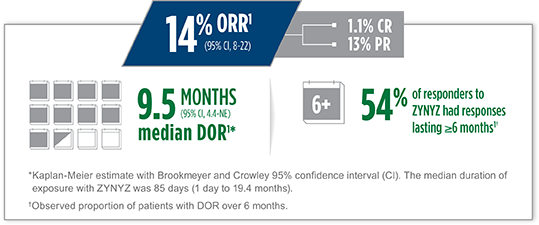
| ZYNYZ demonstrated a 14% ORR (95% CI, 8-22) and 9.5-month median DOR (95% CI, 4.4-NE)1 |
|
|
Out of the 9 HIV-positive patients treated with ZYNYZ in POD1UM-202, 2 (22%) had a response.1
|
| ZYNYZ safety profile |
| • |
Serious adverse reactions occurred in 53% of patients who received ZYNYZ. Serious
adverse reactions in ≥3% of patients included infections (except UTIs), abdominal pain,
anemia, hemorrhage, urinary tract infection, diarrhea, dyspnea, intestinal obstruction, pelvic
pain, and pyrexia. Fatal adverse reactions occurred in 11% of patients who received ZYNYZ
and included pelvic infection, peritonitis, Pneumocystis jirovecii pneumonia, femur fracture, hypercalcemia,
pleural effusion, and pulmonary embolism1
|
| • |
Permanent discontinuation due to an adverse reaction occurred in 7% of patients who
received ZYNYZ and included diffuse large B-cell lymphoma, immune-mediated
enterocolitis, immune-mediated hepatitis, palmar-plantar erythrodysesthesia syndrome, pleural effusion, pneumonitis,
and pseudomonas infection1
|
| • |
Dosage interruptions due to an adverse reaction occurred in 28% of patients who received
ZYNYZ. Adverse reactions which required dosage interruption in ≥2% of patients who
received ZYNYZ included infections (except UTIs), diarrhea, rash, urinary tract infection,
abdominal pain, musculoskeletal pain, and pyrexia1
|
| • |
The most common (≥20%) adverse reactions, including select laboratory abnormalities,
were fatigue, infections (except UTIs), decreased lymphocytes, decreased hemoglobin,
increased alkaline phosphatase, increased AST, musculoskeletal pain, and diarrhea1
|
|
| ADVERSE REACTIONS IN ≥10% OF PATIENTS RECEIVING ZYNYZ IN POD1UM-2021 |
| ADVERSE REACTION |
ZYNYZ (N=94) |
| ALL GRADES (%) |
GRADES 3-4 |
| GENERAL DISORDERS |
| Fatigue* |
38 |
6 |
| Pyrexia |
13 |
2.1 |
| INFECTIONS AND INFESTATIONS |
| Infections (except for UTIs)* |
35a |
11 |
| Urinary tract infection* |
15 |
3.2 |
| MUSCULOSKELETAL AND CONNECTIVE TISSUE DISORDERS |
| Musculoskeletal pain* |
23 |
2.1 |
| GASTROINTESTINAL DISORDERS |
| Diarrhea* |
20 |
3.2 |
| Abdominal pain |
14 |
4.3 |
| Constipation |
14 |
0 |
| Nausea |
14 |
0 |
| Perineal pain* |
12 |
3.2 |
| Vomiting |
12 |
1.1 |
| VASCULAR DISORDERS |
| Hemorrhage* |
19 |
3.2 |
| SKIN AND SUBCUTANEOUS TISSUE DISORDERS |
| Rash* |
16 |
2.1 |
| Pruritus |
12 |
0 |
| METABOLISM AND NUTRITION DISORDERS |
| Decreased appetite* |
15 |
2.1 |
| RESPIRATORY, THORACIC, AND MEDIASTINAL DISORDERS |
| Dyspnea |
14 |
4.3 |
| Cough* |
13 |
0 |
| NERVOUS SYSTEM DISORDERS |
| Headache |
10 |
0 |
| INVESTIGATIONS |
| Weight decreased |
10 |
0 |
|
| *Composite terms were used. |
|
|
|
|
|
Clinically relevant adverse reactions in ≤10% of patients who received ZYNYZ included:
hypothyroidism (9%), infusion-related reaction (5%), pneumonitis/interstitial lung disease (4.3%),
hyperthyroidism (4.3%), adrenal insufficiency (1.1%), immune-mediated hepatitis (1.1%), myositis (1.1%),
and nephritis/acute kidney injury (1.1%).1
|
| Laboratory abnormalities with ZYNYZ1 |
|
SELECT LABORATORY ABNORMALITIES WORSENING FROM BASELINE IN PATIENTS RECEIVING ZYNYZ IN POD1UM-2021
|
| LABORATORY TEST |
ZYNYZ (N=94) |
| ALL GRADES (%)a |
GRADES 3-4 |
| CHEMISTRY |
| AST increased |
25 |
1.2 |
| Alkaline phosphatase increased |
25 |
0 |
| Lipase increased |
16 |
1.3 |
| Amylase increased |
14 |
0 |
| Creatinine increased |
13 |
0 |
| ALT increased |
12 |
1.2 |
|
| LABORATORY TEST |
ZYNYZ (N=94) |
| ALL GRADES (%)a |
GRADES 3-4 |
| HEMATOLOGY |
| Lymphocytes decreased |
34 |
3.5 |
| Hemoglobin decreased |
29 |
3.5 |
|
| a |
Graded per NCI CTCAE version 5.0. Denominators for laboratory analyses were based on patients with a
baseline and at least one on-study value. Patients must have had at least one grade worsening on study to be
counted in analyses and only worst grade was included in the analyses.
|
|
|
|
|
ALT, alanine aminotransferase; AST, aspartate aminotransferase; CD4, cluster of differentiation 4; CTCAE, Common Terminology Criteria for Adverse Events; ECOG, Eastern Cooperative Oncology Group; HIV, human immunodeficiency virus; NCI, National Cancer Institute; NE, not evaluable; PD-L1, programmed death-ligand 1; RECIST, Response Evaluation Criteria in Solid Tumors; UTI, urinary tract infection.
|
|
| IMPORTANT SAFETY INFORMATION |
| Severe and Fatal Immune-Mediated Adverse Reactions |
|
Important immune-mediated adverse reactions listed may not be inclusive of all possible immune-mediated reactions.
|
|
Immune-mediated adverse reactions, which may be severe or fatal, can occur in any organ system or tissue. Immune-mediated adverse reactions can occur at any time after starting treatment with a programmed death receptor-1 (PD-1)/PD-ligand 1 (PD-L1) blocking antibody. While immune-mediated adverse reactions usually manifest during treatment, they can also manifest after discontinuation. Immune-mediated adverse reactions affecting more than one body system can occur simultaneously.
|
|
Early identification and management of immune-mediated adverse reactions are essential to ensure safe use of PD-1/PD-L1 blocking antibodies. Monitor closely for symptoms and signs that may be clinical manifestations of underlying immune-mediated adverse reactions. Evaluate liver enzymes, creatinine, and thyroid function at baseline and periodically during treatment. In cases of suspected immune-mediated adverse reactions, initiate appropriate workup to exclude alternative etiologies, including infection. Institute medical management promptly, including specialty consultation as appropriate.
|
|
Withhold or permanently discontinue ZYNYZ depending on severity. In general, if ZYNYZ requires interruption or discontinuation, administer systemic corticosteroid therapy (1 to 2 mg/kg/day prednisone or equivalent) until improvement to Grade 1 or less. Upon improvement to Grade 1 or less, initiate corticosteroid taper and continue to taper over at least 1 month. Consider administration of other systemic immunosuppressants in patients whose immune-mediated adverse reactions are not controlled with corticosteroids.
|
|
Toxicity management guidelines for adverse reactions that do not necessarily require systemic steroids (e.g., endocrinopathies and dermatologic reactions) are discussed below.
|
|
Immune-Mediated Pneumonitis
|
|
ZYNYZ can cause immune-mediated pneumonitis. In patients treated with other PD-1/PD-L1 blocking antibodies, the incidence of pneumonitis is higher in patients who have received prior thoracic radiation. Immune-mediated pneumonitis occurred in 7 (2.2%) of 320 patients receiving ZYNYZ, including 1 (0.3%) patient with a fatal pneumonitis, 1 (0.3%) patient with Grade 3, and 5 (1.6%) patients with Grade 2. Pneumonitis led to discontinuation of ZYNYZ in 1 (0.3%) patient and to dose delay in 2 (0.6%) patients. Among the 7 patients with pneumonitis, 6 (86%) received corticosteroids and 4 (57%) received high-dose corticosteroids (prednisone ≥ 40 mg per day or equivalent). Pneumonitis resolved in 4 (57%) patients.
|
|
Immune-Mediated Colitis
|
|
ZYNYZ can cause immune-mediated colitis. In cases of corticosteroid-refractory colitis, consider repeating infectious workup to exclude alternative etiologies as cytomegalovirus infection/reactivation has occurred in patients with corticosteroid-refractory immune-mediated colitis. Immune-mediated colitis occurred in 2 (0.6%) of 320 patients receiving ZYNYZ, including 1 (0.3%) patient with Grade 4 and 1 (0.3%) patient with Grade 2. Colitis led to discontinuation of ZYNYZ in 1 (0.3%) patient and to dose delay in 1 (0.3%) patient. Among the 2 patients with colitis, 1 (50%) received corticosteroids. Colitis resolved in all patients.
|
|
Immune-Mediated Hepatitis
|
|
ZYNYZ can cause immune-mediated hepatitis. Immune-mediated hepatitis (Grade 4) occurred in 1 (0.3%) of 320 patients receiving ZYNYZ. Hepatitis led to discontinuation of ZYNYZ in 1 (0.3%) patient. The patient received high-dose corticosteroids, and hepatitis resolved.
|
|
Immune-Mediated Endocrinopathies
|
|
Adrenal Insufficiency
|
|
ZYNYZ can cause primary or secondary adrenal insufficiency. For ≥Grade 2 adrenal insufficiency, initiate symptomatic treatment per institutional guidelines, including hormone replacement as clinically indicated. Withhold or permanently discontinue ZYNYZ depending on severity. Adrenal insufficiency (Grade 3) occurred in 1 (0.3%) of 320 patients receiving ZYNYZ. The event did not lead to dose delay or discontinuation. The patient received corticosteroids.
|
|
Hypophysitis
|
|
ZYNYZ can cause immune-mediated hypophysitis. Hypophysitis can present with acute symptoms associated with mass effect such as headache, photophobia, or visual field cuts. Hypophysitis can cause hypopituitarism. Initiate hormone replacement as clinically indicated. Withhold or permanently discontinue ZYNYZ depending on severity.
|
|
Thyroid Disorders
|
|
ZYNYZ can cause immune-mediated thyroid disorders. Thyroiditis can present with or without endocrinopathy. Hypothyroidism can follow hyperthyroidism. Initiate hormone replacement or medical management of hyperthyroidism as clinically indicated. Withhold or permanently discontinue ZYNYZ depending on severity.
|
|
Hypothyroidism
|
|
Hypothyroidism occurred in 21 (7%) of 320 patients receiving ZYNYZ, including 8 (2.5%) patients with Grade 2, and 13 (4.1%) patients with Grade 1. None of the events led to discontinuation. Hypothyroidism led to dose delay in 1 patient (0.3%). Among the 21 patients with hypothyroidism, 17 (81%) received endocrine therapy. Systemic corticosteroids were not required for any of the 21 patients with hypothyroidism.
|
|
Hyperthyroidism
|
|
Hyperthyroidism occurred in 9 (2.8%) of 320 patients receiving ZYNYZ, including 3 (0.9%) patients with Grade 2 and 6 (1.9%) patients with Grade 1. None of the events led to dose delay or discontinuation of ZYNYZ. Among the 9 patients with hyperthyroidism, 5 (56%) received endocrine therapy.
|
|
Type 1 Diabetes Mellitus, Which Can Present with Diabetic Ketoacidosis
|
|
Monitor patients for hyperglycemia or other signs and symptoms of diabetes. Initiate treatment with insulin as clinically indicated. Withhold ZYNYZ depending on severity. Type 1 Diabetes Mellitus (Grade 3) occurred in 1 (0.3%) of 320 patients receiving ZYNYZ. Type 1 diabetes led to dose delay in 1 (0.3%) patient and did not lead to discontinuation. The patient received insulin.
|
|
Immune-Mediated Nephritis with Renal Dysfunction
|
|
ZYNYZ can cause immune-mediated nephritis. Immune-mediated nephritis occurred in 3 (0.9%) of 320 patients receiving ZYNYZ, including 1 (0.3%) patient with Grade 4 and 2 (0.6%) patients with Grade 3. Nephritis did not lead to discontinuation or dose delay of ZYNYZ. None of the patients with nephritis received corticosteroids or other immunosuppressants. Nephritis resolved in 1 (33%) patient.
|
|
|
Immune-Mediated Dermatologic Adverse Reactions
|
|
ZYNYZ can cause immune-mediated rash or dermatitis. Bullous and exfoliative dermatitis, including Stevens Johnson Syndrome, drug rash with eosinophilia and systemic symptoms (DRESS), and toxic epidermal necrolysis (TEN), has occurred with PD-1/PD-L1 blocking antibodies. Topical emollients and/or topical corticosteroids may be adequate to treat mild to moderate non-exfoliative rashes. Withhold or permanently discontinue ZYNYZ depending on severity.
|
|
Skin reactions occurred in 19 (6%) of 320 patients receiving ZYNYZ, including 2 (0.6%) patients with Grade 3, 16 (5%) patients with Grade 2, and 1 (0.3%) patient with Grade 1. Skin reactions led to dose delay in 3 (0.9%) patients and discontinuation in 1 (0.3%) patient. Among the 19 patients with skin reactions, 8 (42%) patients received topical or systemic corticosteroids, 3 (16%) patients received high-dose corticosteroids, and 1 patient (5%) received topical tacrolimus. Skin reactions resolved in 10 (53%) patients.
|
|
Other Immune-Mediated Adverse Reactions
|
|
The following clinically significant immune-mediated adverse reactions occurred at an incidence of < 1% in 320 patients who received ZYNYZ or were reported with the use of other PD-1/PD-L1 blocking antibodies, including severe or fatal cases. |
|
Cardiac/vascular: myocarditis, pericarditis, vasculitis; Gastrointestinal: pancreatitis to include increases in serum amylase and lipase levels, gastritis, duodenitis, stomatitis; Musculoskeletal: myositis/polymyositis, rhabdomyolysis (and associated sequelae, including renal failure), arthritis, polymyalgia rheumatica; Neurological: meningitis, encephalitis, myelitis and demyelination, myasthenic syndrome/myasthenia gravis (including exacerbation), Guillain-Barré syndrome, nerve paresis, autoimmune neuropathy; Ocular: uveitis, iritis, and other ocular inflammatory toxicities. Some cases can be associated with retinal detachment. Various grades of visual impairment to include blindness can occur. If uveitis occurs in combination with other immune-mediated adverse reactions, consider a Vogt-Koyanagi-Harada like syndrome, as this may require treatment with systemic steroids to reduce the risk of permanent vision loss; Endocrine: hypoparathyroidism; Other (Hematologic/Immune): hemolytic anemia, aplastic anemia, hemophagocytic lymphohistiocytosis, systemic inflammatory response syndrome, histiocytic necrotizing lymphadenitis (Kikuchi lymphadenitis), sarcoidosis, immune thrombocytopenic purpura, solid organ transplant rejection.
|
|
Infusion-Related Reactions
|
|
Severe infusion-related reactions (Grade 3) occurred in 0.3% of patients receiving ZYNYZ. Monitor patients for signs and symptoms of infusion-related reactions. Interrupt or slow the rate of infusion or permanently discontinue ZYNYZ based on severity of reaction. Routine prophylaxis for infusion reactions is not required. Consider premedication with an antipyretic and/or an antihistamine for patients who have had previous systemic reactions to infusions of therapeutic proteins.
|
|
Complications of Allogeneic HSCT
|
|
Fatal and other serious complications can occur in patients who receive allogeneic hematopoietic stem cell transplantation (HSCT) before or after being treated with a PD-1/PD-L1–blocking antibody. Transplant-related complications include hyperacute graft-versus-host disease (GVHD), acute GVHD, chronic GVHD, hepatic veno-occlusive disease after reduced intensity conditioning, and steroid-requiring febrile syndrome (without an identified infectious cause). These complications may occur despite intervening therapy between PD-1/PD-L1 blockade and allogeneic HSCT.
|
|
Follow patients closely for evidence of transplant-related complications and intervene promptly. Consider the benefit versus risks of treatment with a PD-1/PD-L1–blocking antibody prior to or after an allogeneic HSCT.
|
|
Embryo-Fetal Toxicity
|
|
Based on its mechanism of action and animal studies, ZYNYZ can cause fetal harm when administered to a pregnant woman. Advise women of the potential risk to a fetus. Advise females of reproductive potential to use effective contraception during treatment with ZYNYZ and for at least 4 months after the last dose.
|
|
ADVERSE REACTIONS
|
|
Serious adverse reactions occurred in 53% of patients who received ZYNYZ. Serious adverse reactions in ≥3% of patients included infections (except UTIs), abdominal pain, anemia, hemorrhage, urinary tract infection, diarrhea, dyspnea, intestinal obstruction, pelvic pain, and pyrexia. Fatal adverse reactions occurred in 11% of patients who received ZYNYZ and included pelvic infection, peritonitis, Pneumocystis jirovecii pneumonia, femur fracture, hypercalcemia, interstitial lung disease, pleural effusion, and pulmonary embolism.
|
|
Permanent discontinuation due to an adverse reaction occurred in 7% of patients who received ZYNYZ included diffuse large B-cell lymphoma, immune-mediated enterocolitis, immune-mediated hepatitis, palmar-plantar erythrodysesthesia syndrome, pleural effusion, pneumonitis, and pseudomonas infection.
|
|
Dosage interruptions due to an adverse reaction occurred in 28% of patients who received ZYNYZ. Adverse reactions which required dosage interruption in ≥2% of patients who received ZYNYZ included infections (except UTIs), diarrhea, rash, urinary tract infection, abdominal pain, musculoskeletal pain, and pyrexia.
|
|
The most common (≥ 20%) adverse reactions, including select laboratory abnormalities, were fatigue (38%); infections, except UTIs (35%); decreased lymphocytes (34%); decreased hemoglobin (29%); increased alkaline phosphatase (25%); increased AST (25%); musculoskeletal pain (23%); and diarrhea (20%).
|
|
Clinically relevant adverse reactions in ≤10% of patients who received ZYNYZ included hypothyroidism (9%), infusion-related reaction (5%), pneumonitis/interstitial lung disease, (4.3%), hyperthyroidism (4.3%), adrenal insufficiency (1.1%), immune-mediated hepatitis (1.1%), myositis (1.1%), and nephritis/acute kidney injury (1.1%).
|
|
USE IN SPECIFIC POPULATIONS
|
|
Lactation
|
|
Because of the potential for serious adverse reactions in breastfed children, advise women not to breastfeed during treatment and for at least 4 months after the last dose of ZYNYZ.
|
|
Females and Males of Reproductive Potential
|
|
Verify pregnancy status in females of reproductive potential prior to initiating ZYNYZ.
|
|
Please see Full Prescribing Information for ZYNYZ.
|
|
|
|
VIEW FULL PRESCRIBING INFORMATION FOR ZYNYZ
|
|
|
|
%%Custom Closing%%
|
|
%%Sincerely,%%
|
|
%%SalesRep FirstName%% %%SalesRep LastName%%
|
|
%%SalesRep Phone%%
|
|
%%SalesRep EmailAddress%%
|
|
Reference: 1. ZYNYZ Prescribing Information. Incyte Corporation.
|
|
|
|
|