|
|
|
[Dear|Hello|Good Morning|Good Afternoon|Good Evening|Hi] [Dr.|Mr.|Ms.|Mrs.| ] [First name OR last name],
|
|
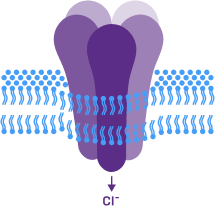
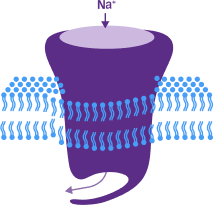
[Thank you for your time.][Sorry I missed you.][As a follow-up to our discussion:][In advance of our meeting:] The XCOPRI mechanism of action (MOA) differs from other anti-seizure medications (ASMs), combining 2 mechanisms in a single treatment.1-5* Take an in-depth look at the unique dual MOA below.
|
|
| XCOPRI reduces neuronal excitability through a unique dual MOA1-5* |
| Positive allosteric modulator of the GABAA receptor3,4 |
| Further enhances inhibition by GABAergic neurons |
|
|
| Inhibits persistent sodium current3,5 |
| Preferentially blocks the sodium channel–mediated persistent current |
|
|
| Positive allosteric modulator of the GABAA receptor3,4 |
| Further enhances inhibition by GABAergic neurons |
|
|
|
|
|
| Inhibits persistent sodium current3,5 |
| Preferentially blocks the sodium channel–mediated persistent current |
|
|
|
| Different from other sodium inhibitors, XCOPRI preferentially inhibits persistent sodium current, rather than transient current. XCOPRI also enhances GABAA-mediated inhibition. These are both important targets in epilepsy to maintain balance between excitation and inhibition.1-5 |
| Different from other sodium inhibitors, XCOPRI preferentially inhibits persistent sodium current, rather than transient current. XCOPRI also enhances GABAA-mediated inhibition. These are both important targets in epilepsy to maintain balance between excitation and inhibition.1-5 |
|
| * |
The precise mechanism by which XCOPRI exerts its anticonvulsant activity is unknown.3 |
|
|
|
| Hear key opinion leader Dr. Raman Sankar discuss how XCOPRI works. |
|
|

|
| Hear key opinion leader Dr. Raman Sankar discuss how XCOPRI works. |
|
|
|
|
|
|
|
[Please reach out to me with any questions.|Please let me know if I can provide any additional information.|Looking forward to further discussing this information with you.|Thanks again for meeting with me.|Looking forward to catching up.]
|
|
|
IMPORTANT SAFETY INFORMATION and INDICATION for XCOPRI® (cenobamate tablets) CV
|
CONTRAINDICATIONS
XCOPRI is contraindicated in patients with hypersensitivity to cenobamate or any of the ingredients in the product.
|
|
XCOPRI is contraindicated in patients with Familial Short QT syndrome.
|
WARNINGS AND PRECAUTIONS
Drug Reaction with Eosinophilia and Systemic Symptoms (DRESS): Also known as Multiorgan hypersensitivity, has been reported in patients taking antiepileptic drugs, including XCOPRI. DRESS has been reported, including one fatality, when XCOPRI is titrated rapidly (weekly or faster titration). No cases of DRESS were reported in an open-label safety study of 1339 partial-onset seizure patients when XCOPRI was initiated at 12.5 mg/day and titrated every two weeks. This finding does not establish that the risk of DRESS is prevented by a slower titration; however, XCOPRI should be initiated at 12.5 mg once daily and titrated every two weeks. DRESS typically, although not exclusively, presents with fever, rash, and/or lymphadenopathy, in association with other organ system involvement. Eosinophilia is often present. If such signs or symptoms are present, the patient should be evaluated immediately. XCOPRI should be discontinued immediately and not restarted if an alternative etiology for the signs or symptoms cannot be established.
|
|
QT Shortening: XCOPRI can cause shortening of the QT interval. Caution should be used when administering XCOPRI and other drugs that shorten the QT interval as there may be a synergistic effect on the QT interval that would increase the QT shortening risk.
|
|
Suicidal Behavior and Ideation: Antiepileptic drugs (AEDs), including XCOPRI, increase the risk of suicidal thoughts or behavior in patients taking these drugs for any indication. Patients treated with any AED for any indication should be monitored for the emergence or worsening of depression, suicidal thoughts or behavior, and/or any unusual changes in mood or behavior. Advise patients, their caregivers, and/or families to be alert for these behavioral changes and report them immediately to a healthcare provider.
|
|
Liver Injury: Clinically significant liver injury has occurred in patients taking XCOPRI. Obtain serum transaminases (ALT and AST) and total bilirubin, if not recently available (i.e., within 3 months) before initiating XCOPRI, and during treatment if clinically indicated. Monitor patients for signs and symptoms of any hepatic injury during treatment. Discontinue XCOPRI in patients with evidence of liver injury in the absence of an alternative etiology.
|
|
Neurological Adverse Reactions: XCOPRI can cause dose-dependent increases in the neurologic adverse reactions including dizziness, diplopia, disturbance in gait and coordination, somnolence, and fatigue.
|
|
Prescribers should advise patients against engaging in hazardous activities requiring mental alertness, such as operating motor vehicles or dangerous machinery, until the effect of XCOPRI is known.
|
|
Withdrawal of AEDs: As with all antiepileptic drugs, XCOPRI should generally be withdrawn gradually because of the risk of increased seizure frequency and status epilepticus. If withdrawal is needed because of a serious adverse event, rapid discontinuation can be considered.
|
MOST COMMON ADVERSE REACTIONS
In adult adjunctive therapy placebo-controlled clinical studies, the most common adverse reactions that occurred in XCOPRI-treated patients (incidence at least 10% and greater than placebo) were somnolence, dizziness, fatigue, diplopia, headache.
|
DOSING CONSIDERATIONS
Dosage adjustment of XCOPRI or other concomitant medications may be necessary.
|
| • |
Consider gradually reducing phenytoin dosages by up to 50% during initial titration. |
| • |
Consider reducing dosages of phenobarbital and clobazam as needed when used concomitantly with XCOPRI. |
| • |
When XCOPRI and carbamazepine or lamotrigine are taken concomitantly, consider increasing dosages as needed of carbamazepine or lamotrigine. |
| • |
Consider increasing dosages as needed of drugs which are CYP2B6 and CYP3A substrates and decreasing dosages as needed of drugs which are CYP2C19 substrates. |
| • |
Effectiveness of hormonal oral contraceptives may be reduced when administered concomitantly with XCOPRI. Women should use additional or alternative non-hormonal birth control. |
|
|
Dosage reduction of XCOPRI may be considered in patients with mild to moderate and severe renal impairment. XCOPRI is not recommended in end‑stage renal disease.
|
|
The maximum recommended daily dose is 200 mg for patients with mild or moderate hepatic impairment. XCOPRI is not recommended in patients with severe hepatic impairment.
|
DRUG ABUSE
XCOPRI is a Schedule V controlled substance.
|
INDICATION
XCOPRI is indicated for the treatment of partial-onset seizures in adult patients.
|
|
Please see full Prescribing Information.
|
|
REFERENCES: 1. Guignet M, Campbell A, White HS. Cenobamate (XCOPRI): Can preclinical and clinical evidence provide insight into its mechanism of action? Epilepsia. 2020;61(11):2329-2339. 2. Perucca E, Bialer M, White HS. New GABA-targeting therapies for the treatment of seizures and epilepsy: I. role of GABA as a modulator of seizure activity and recently approved medications acting on the GABA system. CNS Drugs. 2023;37(9):755-779. 3. XCOPRI [package insert]. Paramus, NJ: SK Life Science, Inc. 4. Sharma R, Nakamura M, Neupane C, et al. Positive allosteric modulation of GABAA receptors by a novel antiepileptic drug cenobamate. Eur J Pharmacol. 2020;879:173117. 5. Nakamura M, Cho JH, Shin H, Jang IS. Effects of cenobamate (YKP3089), a newly developed anti-epileptic drug, on voltage-gated sodium channels in rat hippocampal CA3 neurons. Eur J Pharmacol. 2019;855:175-182.
|
|
|
|
If you no longer wish to receive email communications from XCOPRI, please unsubscribe or manage your communication preferences.
|

|
SK Life Science, Inc.
461 From Road, Paramus, NJ 07652
Tel: 201-421-3800
|
© 2026 SK Life Science, Inc., a subsidiary of SK Biopharmaceuticals Co., Ltd.
PM-US-XCOP-1225 9/25
|
|
|
SK Life Science, Inc.
461 From Road, Paramus, NJ 07652
Tel: 201-421-3800
|
© 2026 SK Life Science, Inc., a subsidiary of SK Biopharmaceuticals Co., Ltd.
PM-US-XCOP-1225 9/25
|
|
|
|
|
|