|
Having trouble viewing this e-mail? View web version
|
|
For the treatment of pulmonary arterial hypertension (PAH) (WHO Group 1) to improve exercise ability.
|

|
|
|
| GO WITH TYVASO: A DIRECT-TO-THE-LUNGS PROSTACYCLIN ANALOGUE1 |
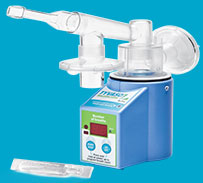
The Tyvaso Inhalation System is designed with your patients in mind, offering short treatment sessions
(2-3 minutes, 4× daily) and individualized dosing.1,2
Help your patients successfully start and continue Tyvaso therapy by creating and managing a treatment plan made to meet their needs. |
| View treatment management tips |
|
|
|
|
Explaining individualized titration to your patients
|
|
Let your patients know that1
|
| • |
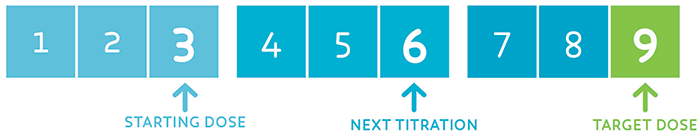
The recommended target dose of Tyvaso is 9 breaths, 4x daily |
| • |
If they can’t tolerate the initial dose of 3 breaths, you can reduce their dose to 1 or 2 breaths per treatment session |
| • |
As they tolerate the medication, you can increase their dose by 1 or 2 breaths per session (instead of 3 breaths) until they reach the target dose of 9 breaths per session |
|
| RECOMMENDED TYVASO TITRATION PER SESSION |
|
|
Start with 3 breaths, titrate to 6 breaths, and then titrate to the target dose of 9 breaths.
|
|
| BE PROACTIVE WHEN INITIATING TYVASO |
|
|
Helping your patients understand the benefits and risks of your therapy recommendation is important.3 For example, you can let your patients know what to
expect when initiating Tyvaso and create an adverse event management plan for them at the time of referral. You can also specify your preferences for any as-needed
medications on the referral form.
|

|
| IMPORTANT SAFETY INFORMATION FOR TYVASO |
|
| • |
The efficacy of Tyvaso has not been established in patients with significant underlying lung disease (such as asthma or chronic obstructive pulmonary disease). Patients with acute pulmonary infections should be carefully monitored to detect any worsening of lung disease and loss of drug effect. |
| • |
Tyvaso is a pulmonary and systemic vasodilator. In patients with low systemic arterial pressure, Tyvaso may cause symptomatic hypotension. |
| • |
Titrate slowly in patients with hepatic or renal insufficiency, as exposure to treprostinil may be increased in these patients. |
| • |
Tyvaso inhibits platelet aggregation and increases the risk of bleeding, particularly in patients receiving anticoagulants. |
| • |
Co-administration of the cytochrome P450 (CYP) 2C8 enzyme inhibitor gemfibrozil may increase exposure to treprostinil. Co-administration of the CYP2C8 enzyme inducer rifampin may decrease exposure to treprostinil. Increased exposure is likely to increase adverse events, whereas decreased exposure is likely to reduce clinical effectiveness. |
|
| • |
The concomitant use of Tyvaso with diuretics, antihypertensives, or other vasodilators may increase the risk of symptomatic hypotension. |
| • |
Co-administration of the CYP2C8 enzyme inhibitor gemfibrozil increases exposure to oral treprostinil. Co-administration of the CYP2C8 enzyme inducer rifampin decreases exposure to oral treprostinil. It is unclear if the safety and efficacy of treprostinil by the inhalation route are altered by inhibitors or inducers of CYP2C8. |
| • |
There are no adequate and well-controlled studies with Tyvaso in pregnant women. It is not known whether treprostinil is excreted in human milk. |
|
|
The most common adverse events seen with Tyvaso in ≥4% of PAH patients and more than 3% greater than placebo in the placebo-controlled clinical study were cough (54% vs 29%), headache (41% vs 23%), throat irritation/ pharyngolaryngeal pain (25% vs 14%), nausea (19% vs 11%), flushing (15% vs <1%), and syncope (6% vs <1%).
|
|
Tyvaso is a prostacyclin vasodilator indicated for the treatment of pulmonary arterial hypertension (PAH) (WHO Group 1) to improve exercise ability. Studies establishing effectiveness included predominately patients with NYHA Functional Class III symptoms and etiologies of idiopathic or heritable PAH (56%) or PAH associated with connective tissue diseases (33%).
|
|
The effects diminish over the minimum recommended dosing interval of 4 hours; treatment timing can be adjusted for planned activities.
|
|
While there are long-term data on use of treprostinil by other routes of administration, nearly all controlled clinical experience with inhaled treprostinil has been on a background of bosentan (an endothelin receptor antagonist) or sildenafil (a phosphodiesterase type 5 inhibitor). The controlled clinical experience was limited to 12 weeks in duration.
|
|
| TYVISIhcpJUN16 |
For more information about Tyvaso, please see Full Prescribing Information, Patient Package Insert, and the Tyvaso Inhalation System Instructions for Use manual. Questions? Call Customer Service
at 1-877-UNITHER (1-877-864-8437).
|
|
PAH=pulmonary arterial hypertension; WHO=World Health Organization.
|
References: 1. Tyvaso [package insert]. Research Triangle Park, NC: United Therapeutics Corporation; 2016.
2. Tyvaso [patient prescribing information]. Research Triangle Park, NC: United Therapeutics Corporation; 2013.
3. Tallman K, Janisses T, Frankel RM, Sung SH, Krupat E, Hsu JT. Communication practices of physicians with high patient-satisfaction ratings. Perm J. 2007;11(1):19-29.
|
|
|