|
| Dear UCB Colleagues, |
| I'm pleased to share highlights and key learnings from the 2026 American Academy of Neurology (AAN) Annual Meeting. Please note this information is for internal use only and should not be used in external discussions with healthcare providers. |
| Bringing together more than 16,000 neurology professionals from North America and around the world, AAN remains one of the most influential meetings in our field. It provides a forum to stay current on advances in neuroscience, evolving clinical practice patterns, and progress across clinical development programs. This year’s meeting had more focus on DEEs than in previous years, although relatively still low. There was also broader attention to seizure disorders, rare neurologic diseases, and innovative gene therapies and precision medicine. |
| Our presence at AAN 2026 was strong and impactful. Thank you to everyone who participated onsite, your contributions were key to this success. We would especially like to recognize our MSLs, Kameron Azarm, Alyssa Jameson, Katie Leaderbrand, and Jeanne Vander Zanden (lead).
|
| We continue to evaluate key scientific insights and themes to clearly communicate the differentiated value of our portfolio and its impact for patients and healthcare providers. As we move forward, we will build on this momentum and strengthen cross-functional partnerships to ensure our strategy, messaging, and scientific leadership remain differentiated in a rapidly evolving landscape. |
| Thank you again for your dedication and contributions. |
Kind regards,
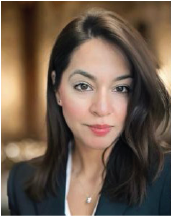
Dilnaz Hassan, MD
Medical Solutions Lead
US Neurology Epilepsy &
Rare Syndromes
|
|
|
|
|
|
>16,000
|
AAN attendees |
|
112
|
UCB attendees across entire organization (US and Global both RDO/EaRs) |
|
34
|
UCB Neurology & Rare Syndromes attendees across entire organization
(US and Global) |
|
17
|
UCB Neurology & Rare Syndromes medical attendees across entire organization
(US and Global) |
|
|
1
|
ITU Update |
|
102
|
ITU Attendees (room at full capacity)
|
|
2
|
FFA Focus Groups |
|
13
|
Total Focus Group HCP
Attendees
(all experts in DEEs) |
|
>70
|
Unique HCP Engagements/Interactions (including STAP GSEP Dinner/
Focus Groups) |
|
|
14
|
UCB Scientific Poster Presentations |
|
1
|
UCB Selected Scientific Poster Oral Podium Presentation (of the 14 total) |
|
264
|
QR Codes Scanned |
|
|
40
|
Relevant Scientific Sessions (seminars, hubs, courses, scientific poster sessions) |
|
254
|
Total Epilepsy-related Abstracts Presented |
|
25
|
High-priority Sessions Covered by Medical |
|
74
|
Priority Non-UCB Posters Covered by Medical |
|
|
|
|
|
- Epilepsy content was notable, in posters and educational sessions. Some key topics included guideline development in epilepsy, ASM pharmacology 101, recognizing epileptiform activity on EEG, genetic testing, developments in gene therapy/precision medicine, and decision-making in acute seizure management. The UCB-sponsored ITU highlighted content related to Study 1900, the impact of FFA on executive function in LGS, and RWE demonstrating reductions in HCRU use and ASM claims. Notably, a non-UCB session on acute seizure management included content from the REST consensus paper developed from last year's UCB-sponsored ITU, underscoring its value and broad impact
- Competitor scientific data presence: Praxis presented positive Ph2/3 EMBOLD data on relutrigine, reinforcing their progress in the treatment of SCN2A- and SCN8A- related DEEs. Stoke framed Dravet as a lifelong disease and highlighted zorevunersen as an emerging DMT that treats seizures and NSOs. SK positioned cenobamate as a high-efficacy ASM, supported by data on durability, seizure freedom, NSOs, and real-world outcomes.
Lundbeck emphasized earlier, more holistic identification of DEEs; they framed their company as “focused innovators in neuroscience,” and unlike previous congresses, they appear to be moving away from messaging bexicaserin as a 5-HT2 “super”-agonist. Acadia announced a new powder formulation of DAYBUE STIX for Rett syndrome that aims to avoid the diarrhea side effect caused by an inactive ingredient in the oral solution
-
Competitor medical booth presence: Praxis emphasized mechanism-driven CNS innovation and cohesive scientific messaging. SK focused on earlier-line cenobamate use and its durable seizure control. Stoke featured interactive DS and Ph3 EMPEROR content, highlighting non-seizure disease burden and the benefits of a disease-modifying approach
|
|
| |
|
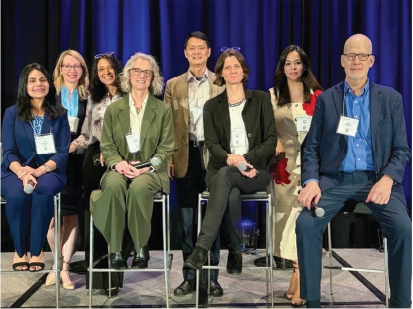
Pictured below: ITU: Scientific Exchange on New Clinical and Real-World Evidence for FINTEPLA (fenfluramine) in Dravet and Lennox-Gastaut Syndromes
|
 |
|
Back (L-R): Mercy Martin, MSN, FNP-C; Nayla Chaijale, PhD; Hugo Xi, MD; Dilnaz Hassan, MD.
|
|
Front (L-R): Jaya Kushalani, MD, PhD; Amelie Lothe, PhD; Heidi Henninger, MD, FAAN, FAES; David Burdette, MD, FACNS
|
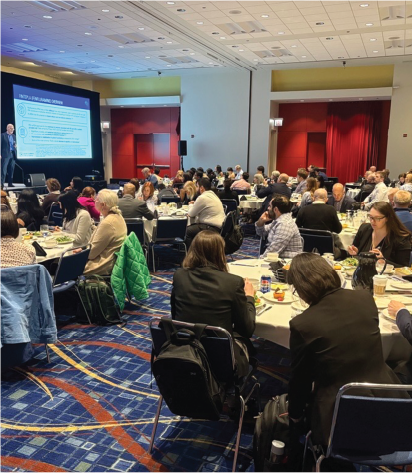 |
| The ITU drew strong attendance. |
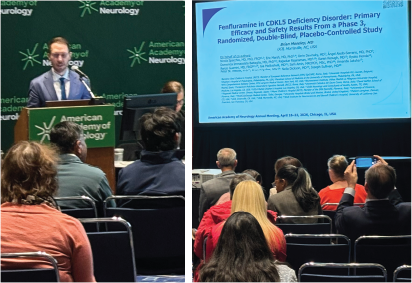
Pictured below: Oral presentation by
Brian Moseley, MD
|
 |
|
|
Study 1900
|
- Final OLE data (up to 4 years) of pediatric and adult patients with DS or LGS showed a safety profile consistent with that in previous studies
- CGI-I ratings, as reported by caregivers and investigators, were improved or stable in >90% of patients receiving FFA
|
|
Impact of FFA on Executive Function in LGS
|
- FFA was associated with greater caregiver-reported improvements in everyday executive function in
adults with LGS
- Improvements were independent of reductions in seizure frequency, supporting non-seizure benefits with FFA
|
|
HCRU and ASM Claims
|
- In patients with LGS, FFA persistence was associated with reductions in HCRU (ambulance use, ER visits, and inpatient hospitalizations) and concomitant ASM burden
- These results suggest FFA may be associated with better QOL and lower economic burden
|
|
Audience Polling
|
- Among the FFA data presented, attendees indicated that the real-world evidence on HCRU and ASM use was most informative for treatment decision-making
|
|
| |
|
Objective
|
Explore the perceptions and experiences of HCPs who treat patients with DS/LGS/DEEs with awareness of FFA as a treatment option, using the Wirrell (2024) practical considerations paper and the Villanueva (2025) consensus paper to inform two separate focus group discussions.
|
|
Key Learnings
|
- Improvement in non-seizure outcomes, such as sleep quality and behavior were viewed as significant when considering FFA as a treatment option
- The potential to reduce concomitant ASMs was considered impactful, reflecting a shared goal of minimizing overall drug burden
- The importance of coordinated care between specialties was emphasized, especially when modifying treatment plans
- Content on titration and drug-drug interactions was valued for supporting practical initiation of FFA
- Educational and clinical opportunities still remain when considering the transition of care from pediatric to adult patients
|
|
|
|
|
Prevalence, Treatment Patterns, and Healthcare Resource Utilization Among Patients with CDKL5 Deficiency Disorder: Retrospective Analysis of US Claims Data
|
- Authors: Amin S, Devinsky O, Dong X, Khushalani J, Ohagen P, Martin M, Rajaraman RR, Demarest S
|
Costs, Healthcare Resource Utilization and Patient Characteristics Associated with CDKL5 Deficiency Disorder:
A Retrospective Analysis of the US Closed Claims Database MarketScan
|
- Authors: Khushalani J, Sile B, Roberts J, Kuba A, Brunnert M, Marsh SE, Martin M, Rajaraman RR, Demarest S
|
|
Disruptive Sleep in Developmental and Epileptic Encephalopathies: Interim Results of a Caregiver Survey
|
- Authors: Wilkinson AL, Bearden DR, Bryan B, Devine E, Freed A, Graglia JM, Lothe A, Manzo AM, Martin M, Meskis MA, Son Rigby C, Sourbron J, Utley K, Bailey LD
|
|
Fenfluramine in CDKL5 Deficiency Disorder: Primary Efficacy and Safety Results from a Phase 3, Randomized, Double-blind, Placebo-controlled study
|
- Authors: Moseley B, Specchio N, Marsh E, Devinsky O, Aledo-Serrano A, Immacolata Battaglia D, Rajaraman R, Keough K, Honda R, Guerrini R, Melikishivili G, Amin S, Jaksha A, St. Wecker P, Kilgallen B, Dickson N, Sullivan J
|
Healthcare Resource Utilization, Antiseizure Medication Claims, and Treatment Persistence in Patients with
Lennox-Gastaut Syndrome Receiving Fenfluramine in the United States
|
- Authors: Kerr WT, Khushalani J, Henninger HL, Ohagen P, Li R, Yadav N, Strzelczyk A
|
|
Mortality Rates and Risk Factors Among Patients with Lennox-Gastaut Syndrome or Dravet Syndrome
|
- Authors: Donner EJ, Dixon-Salazar T, Khushalani J, Lloyd D, Henninger HL, Brunnert M, Kerr WT
|
|
Streamlining the Process of Caregiving for a Loved One with Dravet or Lennox-Gastaut Syndrome
|
- Authors: Kellermann T, Meer N, Lake C
|
Association of Fenfluramine Treatment and Everyday Executive Functioning in Adult Patients with
Lennox-Gastaut Syndrome
|
- Authors: Breuillard D, Knupp K, Strzelczyk A, Andrade DM, Healy P, Abraham J, Lothe A, Nabbout R
|
|
Understanding Frequency and Characteristics of Prolonged Seizures Using Seizure Diary Data
|
- Authors: Khushalani J, Moss R, Chiang S, Burns R, Haut SR
|
Loss of Productivity, Seizure Worry, and Patient and Caregiver Quality of Life Associated with Prolonged Seizures:
Results from a Global Real-World Point-in-Time Study
|
- Authors: Trinka E, Walker M, Kälviäinen R, Haut SR, Stern J, Hirsch LJ, Gillespie A, LeBrocq L, Laloyaux C, Radunz O, Wilson JC
|
|
Patient and Caregiver Perceptions of Acute Seizure Medications and the Rapid and Early Seizure Termination (REST) Approach: Qualitative Interviews
|
- Authors: Ho K-A, Tervonen T, Pina-Garza JE, Toledo Argany M, Haut SR, Bhatia T, Jimenez-Moreno C, Laloyaux C
|
|
Patient and Caregiver Preferences for Acute Seizure Medications: A Quantitative Survey
|
- Authors: Laloyaux C, Tervonen T, Villanueva V, Sirven J, Kukla A, Jimenez-Moreno C, Ho K-A
|
|
Seizure Duration and Timepoint Cutoffs for Statistically Defining a Prolonged Seizure: A Post Hoc Analysis of the SCORE Video-EEG Database
|
- Authors: Sile B, Meritam Larsen P, Kuba A, Elmoufti S, Roberts J, Trinka E, Laloyaux C, Beniczky S
|
Describing the Population of Patients with Prolonged Seizures: US Subgroup Results from a Global Real-World
Point-In-Time Study
|
- Authors: Trinka E, Walker M, Kälviäinen R, Haut S, Stern J, Hirsch LJ, Gillespie A, LaBrocq L, Laloyaux C, Radunz O, Wilson JC
|
 Poster
Sessions Poster
Sessions  Oral Presentations
|
|
|
The UCB Post AAN 2026 Newsletter
|
| |
CONFIDENTIAL. FOR INTERNAL USE ONLY AND NOT TO BE DOWNLOADED OR SAVED.
DO NOT DISTRIBUTE OR USE FOR DISCUSSIONS EXTERNALLY.
©2026 UCB, Inc. Smyrna, GA 30080. All rights reserved.
|

|
|
|
|